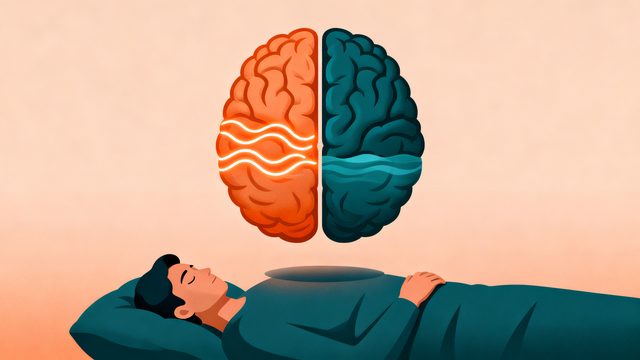
REM vs Deep Sleep: What Each Stage Does for You
Not all sleep is equal. The two stages people obsess over — REM and deep — do completely different jobs, and skimping on either shows up in different ways the next day.
Deep sleep: the physical repair shift
Also called slow-wave sleep, deep sleep dominates the first half of the night. It's when growth hormone releases, tissue repairs, and the brain clears metabolic waste. Wake someone from here and they're disoriented and groggy.
REM: the brain's filing system
REM grows in the second half of the night. It's where memory consolidation, emotional processing, and learning solidify. Skimp on REM and you're irritable, forgetful, and worse at problem-solving.
Why this matters for your schedule
Cutting sleep short steals disproportionately from REM (late-night). A too-early alarm robs the stage you need most for mood and memory.
See how stages fit the 90-minute cycle →
Frequently asked questions
What is REM sleep?
Rapid Eye Movement sleep — a stage where your brain is highly active, your eyes move rapidly under closed lids, and you experience vivid dreams. It typically occupies 20-25% of adult sleep, occurring in longer bouts toward morning. Critical for memory consolidation, emotional processing, and learning.
What is deep sleep?
Slow-wave sleep (SWS, stages N3) — the deepest non-REM stage. Your brain produces slow, high-amplitude delta waves, muscles are fully relaxed, and you're hardest to wake. Occupies 15-25% of sleep, mostly in the first third of the night. Critical for physical recovery, immune function, and memory.
Which is more important: REM or deep sleep?
Both are essential, and you can't selectively increase one without the other. REM is critical for emotional regulation and procedural memory; deep sleep for physical recovery and declarative memory. Chronic REM suppression is associated with depression; chronic deep sleep loss is linked to cognitive decline.
How do I get more deep sleep?
Deep sleep is enhanced by: regular exercise (but not within 2 hours of bed), cool bedroom temperature (18-19 °C), avoiding alcohol (which suppresses deep sleep in the second half of the night), and consistent sleep schedule. Age also matters — deep sleep declines steadily after age 30.
Why don't I remember my dreams?
You probably are dreaming — most people have 4-6 dream episodes per night. Not remembering them usually means you woke during a non-REM phase, or you didn't pay attention upon waking. Keeping a dream journal by your bed and writing immediately upon waking can help you recall more.
References
- Carskadon, M. A., & Dement, W. C. (2011). Monitoring and staging human sleep. In: Kryger et al., Principles and Practice of Sleep Medicine, 5th ed.
- Hobson, J. A., & Pace-Schott, E. F. (2002). The cognitive neuroscience of sleep: neuronal systems and sleep. Nature Reviews Neuroscience, 3(9), 679–693.
- National Institute of Neurological Disorders and Stroke. (2024). Brain Basics: Understanding Sleep. ninds.nih.gov.