Sleep Inertia: Why You Wake Up Groggy (and How to Fix It)
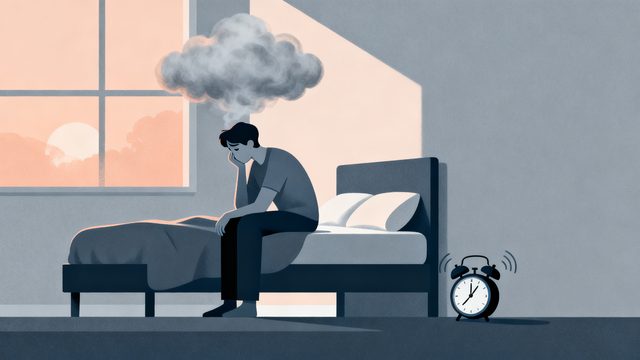
The alarm rings, you open your eyes, and for the next 20 minutes you're a foggy, irritable zombie. That's sleep inertia — and it's not a character flaw, it's biology.
What sleep inertia is
Sleep inertia is the transitional impairment in performance and alertness right after waking, lasting minutes to a couple of hours. It's worst when you wake from deep sleep — which is exactly why waking mid-cycle feels brutal.
Why your alarm picks the worst moment
A fixed alarm often lands inside a deep-sleep segment. Waking there dumps you into maximal inertia. Aligning wake time to the end of a 90-minute cycle (light sleep) is the single biggest reducer.
Shake-it-off tactics
- Bright light immediately — open curtains or use a sunrise alarm.
- Hydrate and move — a glass of water and a stretch signal "up."
- Delay hard decisions — don't send that email at 6:05 a.m.
Find your lightest wake time →
Frequently asked questions
What is sleep inertia?
The grogginess, impaired performance, and reduced alertness you feel immediately after waking. It typically lasts 15-30 minutes but can extend to 2-4 hours in severe cases. Caused by the brain still being in a sleep-like state, especially after waking from deep (slow-wave) sleep.
How long does sleep inertia last?
Most people fully recover within 30 minutes. Severity depends on what stage you were in when you woke — waking from deep sleep can produce 2-4 hours of grogginess, while waking from light sleep or REM produces shorter, milder inertia.
How do I reduce sleep inertia?
Three things help: (1) Use multiple alarms spaced 20 min apart (so you wake from lighter sleep), (2) Expose yourself to bright light immediately upon waking — suppresses melatonin and signals "daytime," (3) Move physically — even a short walk cuts inertia in half.
Why do I feel worse after a long nap?
Long naps (over 30-40 min) enter deep sleep, and waking from deep sleep produces severe sleep inertia — the worst kind. You feel groggy, irritable, and sometimes more tired than before the nap. Stick to 20-25 min naps to stay in light sleep stages.
Is sleep inertia dangerous?
For most adults, it's just an inconvenience. But for people who must perform immediately upon waking (emergency responders, surgeons, parents of infants), severe sleep inertia is a real safety concern. The strategies above help.
References
- Hilditch, C. J., et al. (2016). Sleep inertia: current insights. Nature and Science of Sleep, 8, 129–140.
- Dinges, D. F. (1990). Are you awake? Cognitive performance and reverie during the hypnopompic state. In: Bootzin, & Kihlstrom (Eds.), Sleep and Cognition.
- American Academy of Sleep Medicine. (2021). Clinical Practice Guidelines. aasm.org.