Sleep Debt: Can You Really Catch Up on Lost Sleep?
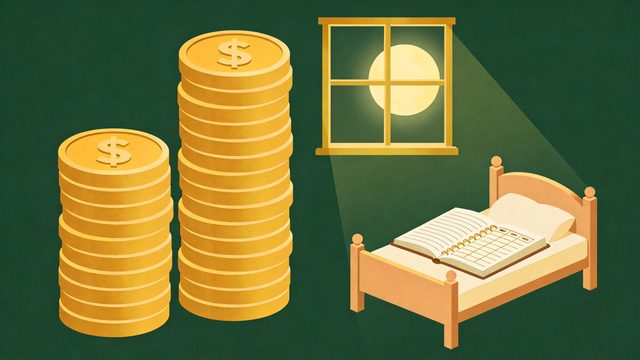
Skip sleep on Tuesday, "catch up" on Saturday — it feels like it balances out. It doesn't. Sleep debt is the gap between the sleep you need and the sleep you got, and your body is a strict accountant. Here's what the research actually says.
What sleep debt is
If you need 8 hours but sleep 6, you're 2 hours in debt. Do that five nights and you're 10 hours behind. It's not a metaphor — studies show measurable drops in attention, mood, and metabolic health that scale with the deficit.
Can you catch up on the weekend?
Partly, and briefly. A long Sunday morning can erase some of the acute drowsiness, but it doesn't fully repair the cognitive and metabolic effects of a week of short sleep. And the late wake-up itself shifts your body clock later, making Sunday night's sleep worse and Monday harder.
The cost of chronic debt
- Metabolic: short sleep is linked to higher hunger hormones and worse blood-sugar control.
- Immune: even a few bad nights lower resistance to colds.
- Cognitive: reaction time and judgment degrade toward drunk levels after enough lost sleep.
- Mood: irritability and anxiety climb as the deficit grows.
How to dig out
- Prioritize a few early nights. Going to bed 30–60 minutes earlier for a week repays more than one heroic 12-hour lie-in.
- Nap smart. A 20–30 minute nap pays back alertness without deepening the clock-shift trap.
- Fix the cause, not the symptom. If work or screens steal your nights, the only real fix is the schedule itself.
- Guard one consistent wake time. It prevents the debt from compounding in the first place.
Prevention beats recovery
The cheapest sleep debt is the one you never build. Know your real need first:
Frequently asked questions
What is sleep debt?
The cumulative difference between the sleep you need and the sleep you actually get, measured in hours. A consistent 1-hour deficit per night creates a 7-hour weekly debt. Sleep debt affects cognition, mood, metabolism, and immune function — even when you don't feel tired.
Can you die from sleep deprivation?
Yes — total sleep deprivation for 11+ days has caused death in animal studies. In humans, severe chronic sleep deprivation is linked to significantly higher all-cause mortality. Rare genetic conditions (Fatal Familial Insomnia) cause death within 12-18 months.
How do you recover from sleep debt?
You can recover most of it, but it takes longer than you think. One long weekend of sleep isn't enough. Research shows 2 weeks of extended sleep (9-10 hours) is needed to normalize cognitive performance after a week of 6-hour nights.
Does sleep debt ever go away completely?
Yes, with consistent 7-9 hour sleep for 1-2 weeks. But recovery is gradual, not overnight. Micro-sleeps, weekend lie-ins, and naps help, but they don't fully replace consolidated nighttime sleep. The debt compounds — paying it down matters.
Can you build up a "sleep reserve" by sleeping more?
Partially. Studies on "sleep banking" — sleeping 10 hours for a week before a known sleep-restricted period — show modest protective effects. But you can't fully bank enough sleep for a chronic deficit. Daily consistency beats pre-loading.
References
- Van Dongen, H. P., et al. (2003). The cumulative cost of additional wakefulness: dose-response effects on neurobehavioral functions and sleep physiology from chronic sleep restriction and total sleep deprivation. Sleep, 26(2), 117–126.
- Centers for Disease Control and Prevention. (2022). Sleep and Chronic Disease. cdc.gov.