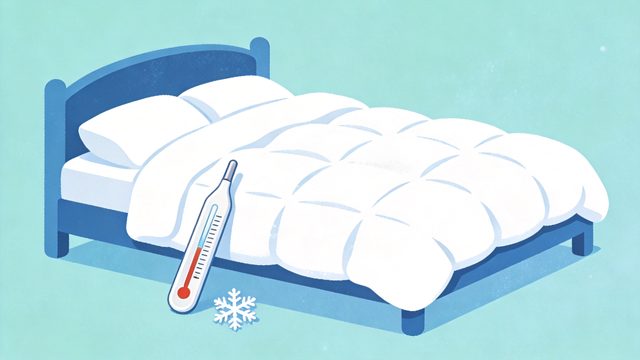
The Best Bedroom Temperature for Sleep
If you've ever slept badly in a hot room, you've felt the science directly: your body needs to drop its core temperature to fall and stay asleep. The thermostat is a sleep tool most people ignore.
The magic range
Most research points to about 18–20°C (65–68°F) for adults. Individuals vary, but "cool, not cold" is the rule. A room above ~24°C reliably fragments sleep and reduces deep stages.
Why cool helps
Sleep onset is triggered partly by a core-temperature drop. A warm environment fights that drop, delaying sleep and increasing wake-ups. Hands and feet warming (vasodilation) is how your body dumps heat — which is why warm socks can sometimes help despite a cool room.
Practical ways to hit it
- Set the thermostat lower an hour before bed.
- Use a fan for both cooling and steady white noise.
- Layer bedding so you can adjust without waking fully.
Add this to your hygiene checklist →
Frequently asked questions
What is the ideal bedroom temperature for sleep?
The consensus sleep medicine guidance is 18-19 °C (65-67 °F). Cooler than your waking comfort because your core body temperature has to drop ~1 °C to initiate sleep. Most people overshoot by keeping rooms at 21-22 °C and then wondering why they wake up at 3 a.m.
Is it better to sleep in a cold room or a warm room?
Cold wins. Your body actively cools itself to fall asleep, then warms back up before waking. A cool room supports that thermoregulatory arc. Warm rooms fragment sleep by triggering mini-wake-ups you usually don't remember.
Does a fan help you sleep if the room is hot?
Yes — fans cool the skin directly (not the air), which is what your body actually needs for sleep onset. The white-noise side effect helps too. If the room is above 24 °C, a fan alone won't be enough and you should also reduce bedding.
Why do I wake up at night when the room is too warm?
Above ~22 °C, your thermoregulatory system starts working overtime. It briefly raises skin blood flow to dump heat, which can cause micro-arousals. Most people attribute these to "needing the bathroom" but the real cause is thermal.
Should I keep the same temperature all night?
Slightly warmer at dawn is fine — your body warms up naturally before waking. But the 18-19 °C target should hold for the first 4-5 hours, which is when deep sleep dominates.
References
- Okamoto-Mizuno, K., & Mizuno, K. (2012). Effects of thermal environment on sleep and circadian rhythm. Journal of Physiological Anthropology, 31(1), 14.
- Sleep Foundation. (n.d.). The Best Temperature for Sleep. sleepfoundation.org.