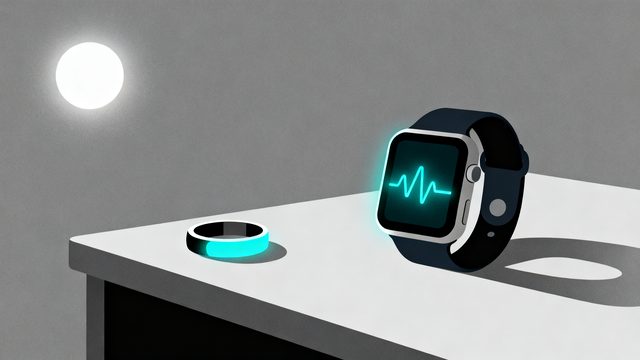
Do Sleep Trackers Actually Work? Oura vs Whoop vs RingConn
Wrist and ring trackers promise to reveal your deep and REM sleep in colorful charts. They're useful — but the stage accuracy is rougher than the marketing implies. Here's an honest breakdown.
How they work
Consumer devices infer sleep from movement and heart-rate variability, not brain waves. Without EEG, stage estimates are educated guesses. Studies show they're decent at total sleep time and okay at sleep/wake, but shakier on REM vs deep splits.
Oura vs Whoop vs RingConn
- Oura Ring: strong battery and trends; popular for readiness scores.
- Whoop: subscription model, focuses on strain/recovery.
- RingConn: lighter app, no subscription, similar sensing.
All three are in the same ballpark for accuracy; pick by comfort, battery, and whether you hate subscriptions.
Where they help — and hurt
They shine at trends and consistency (did you sleep worse this week?) and at catching obvious issues like late caffeine. They hurt when people obsess over nightly stage scores — which can create anxiety that worsens sleep.
What the stages actually mean →
Frequently asked questions
Are sleep trackers accurate?
Consumer wearables (Oura, Apple Watch, Fitbit) are 60-80% accurate for total sleep time and pretty good at detecting sleep vs wake. They're NOT accurate for sleep stages — they typically overestimate light sleep and underestimate deep sleep. Don't make decisions based on stage data.
Do sleep trackers actually improve sleep?
Mixed evidence. For people with insomnia, they can worsen sleep anxiety ("my tracker says I only got 6 hours"). For sleep-curious healthy adults, they can be educational. The biggest benefit: pattern visibility — seeing trends over weeks.
Is REM sleep tracking reliable?
No. Consumer devices estimate REM using heart rate variability and movement, but the gold standard (EEG) shows they misclassify REM up to 40% of the time. Treat REM percentages as rough estimates, not medical-grade data.
Which sleep tracker is the most accurate?
For research-grade accuracy, you need EEG (Dreem, Muse S, or clinical polysomnography). Among consumer wearables, Oura Ring tends to perform best in validation studies, with Apple Watch and Fitbit close behind. None are medical-grade.
Should I stop using my sleep tracker?
If it causes anxiety or you find yourself obsessing over the data, yes — take a break. If you use it as one data point among many (subjective feeling, energy levels, daytime function), it can be useful. The data should inform, not dictate.
References
- Chinoy, E. D., et al. (2021). Performance of seven consumer sleep-tracking devices compared with polysomnography. Sleep, 44(5), zsaaab.
- U.S. Food and Drug Administration. (2023). General Wellness: Policy for Low-Risk Devices. fda.gov.